
Entertainment
Public Restrooms: Staying Safe During a Pandemic

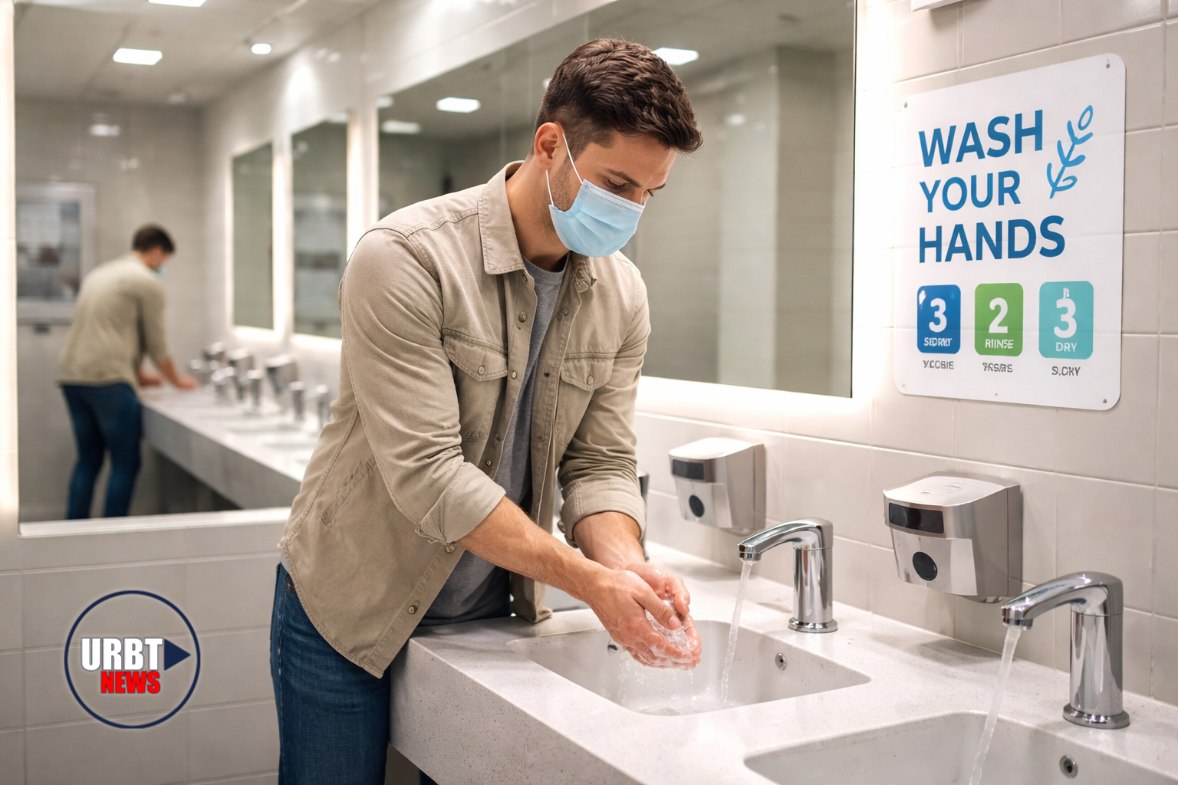
Staying Safe During a Pandemic
Overview
Public restrooms are essential for daily life. They support commerce, travel, and basic hygiene. During a pandemic, using them safely requires awareness. While person-to-person spread is the primary concern, shared facilities need extra caution. Understanding the risks allows for informed decisions. Avoidance is not always practical or necessary.
How Transmission Works in Enclosed Restroom Spaces
Restrooms are often small spaces with limited air flow. They have hard surfaces and shared fixtures, leading to crowding. Transmission can occur through airborne particles and contaminated surfaces. Lapses in hand hygiene can also contribute. Addressing these factors is key to staying safe. Public Restrooms: What You Need to Know About Using Them Safely Amid the Pandemic helps you stay informed.
Airborne risks arise from breathing, talking, and coughing. The rapid turnover of people in restrooms is a concern. Ventilation systems differ greatly between facilities. Some have mechanical ventilation, others lack it. Surface risks involve handles, faucets, and dispensers. Fomite transmission remains possible through surface contact. This happens when touching the face after touching contaminated items.
Toilet flushing creates a specific aerosol effect. This action sprays microscopic particles into the air. Modern toilets might reduce droplet spread, but many don’t. This reinforces the need for proper ventilation and hygiene. Remember that this doesn’t guarantee infection. Diligence in taking precautions is essential in public facilities.
Assessing Risk by Restroom Type
Restroom risk levels vary depending on design and usage. High-traffic areas like airports often have better ventilation. However, these locations often experience more crowding. Retail restrooms vary greatly. Some have mechanical ventilation, but others do not. Single-occupancy restrooms offer better control over personal space.
Portable restrooms are often the riskiest option. They lack mechanical ventilation and rely on natural airflow. Surface contamination is likely in these environments. Sink access can be limited or nonexistent. Carrying hand sanitizer is especially important here. Remember to use it often after touching surfaces.
Practical Safety Measures for Users
Several actions can reduce your risk when using public restrooms. Public restrooms: What you need to know about using them safely amid the pandemic can help you make informed choices.
Minimize the time you spend inside the restroom. Prolonged exposure increases the risk of inhaling particles. Enter, use the facilities, wash your hands, and leave quickly. Wear a well-fitted mask in crowded restrooms. Masks are important in aerosol-heavy environments. Make sure the mask fits snugly to prevent gaps.
Maintain distance from other people when possible. Choose a stall or urinal that allows for spacing. Reducing proximity minimizes shared air exposure. Avoid touching surfaces unnecessarily. Use your shoulder to push doors and your foot to flush toilets. This prevents fomite transmission of pathogens from surfaces.
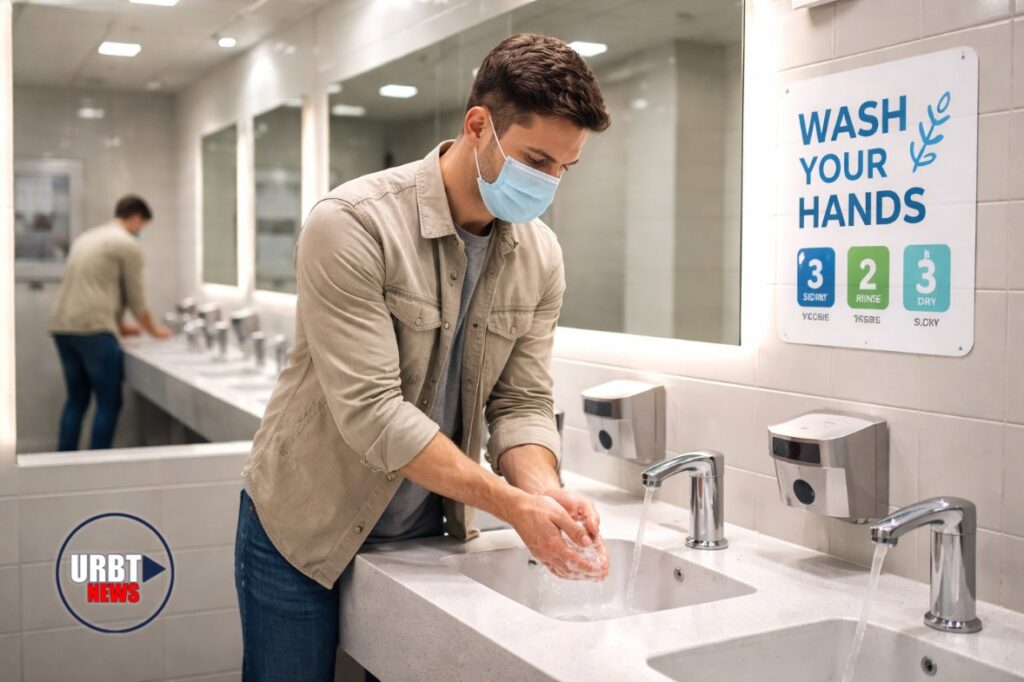
Flush the toilet with the lid closed whenever possible. If there’s no lid, step back when flushing. This minimizes aerosol exposure from the toilet plume. Wash your hands thoroughly for at least 20 seconds. Use soap and water and dry your hands completely. Pathogens spread more easily from wet skin.
Use hand sanitizer after leaving the restroom. Door handles are unavoidable in some restrooms. Apply sanitizer after touching handles, especially after washing. This offers extra protection against germs. Remember to stay vigilant and prioritize cleanliness in public spaces.
Facility Management and Engineering Controls
Building operators can improve restroom safety. Ventilation is a key risk-reduction strategy. Increasing air changes per hour helps clear aerosols. Touchless fixtures reduce surface contact. Automated faucets and dispensers limit fomite exposure. Doorless designs also reduce surface contact.
Cleaning and disinfection are still important. Disinfect high-touch surfaces frequently. Match disinfection cycles with restroom traffic. Clear signage can also help. Reminders about masking, occupancy limits, and hand hygiene improve compliance. Consistent sanitation provides user reassurance.
Avoiding public restrooms is unrealistic for many people. Travelers, older adults, and people with medical issues need access. The goal is to manage risk, not eliminate it entirely. Basic precautions like ventilation, masking, and handwashing are effective and affordable. Public restrooms are a shared community space. By taking precautions, both users and operators contribute to a safer environment.
Frequently Asked Questions
How does ventilation reduce restroom risks?
Ventilation systems remove airborne particles. Increased air circulation clears the space of viruses and germs. This reduces the chance of inhaling contaminated air.
Why is handwashing so important?
Handwashing removes pathogens from your skin. Soap and water effectively kill germs and viruses. Washing for at least 20 seconds is crucial for thorough cleaning.
Are masks necessary in public restrooms?
Masks reduce the spread of airborne particles. In crowded indoor restrooms, masks provide extra protection. They prevent you from inhaling potentially infectious aerosols.
What are fomites and how do I avoid them?
Fomites are surfaces that can carry infectious agents. Door handles and faucets are common examples. Avoid touching surfaces directly. Use a paper towel or your sleeve for protection.
Is hand sanitizer an effective alternative to handwashing?
Hand sanitizer is a good alternative when soap and water are unavailable. It kills germs on your hands. Use sanitizer with at least 60% alcohol content for best results.
public restrooms | pandemic safety | hand hygiene | ventilation | fomite transmission | mask use | restroom risks | facility management | cleaning protocols
PublicHealth #RestroomSafety #PandemicPrecautions #HygieneTips #SafetyFirst #Cleanliness #ViralTransmission #HealthTips #StaySafe