
Business News
Figueroa Street Prostitution Pushes LA Businesses to the Brink

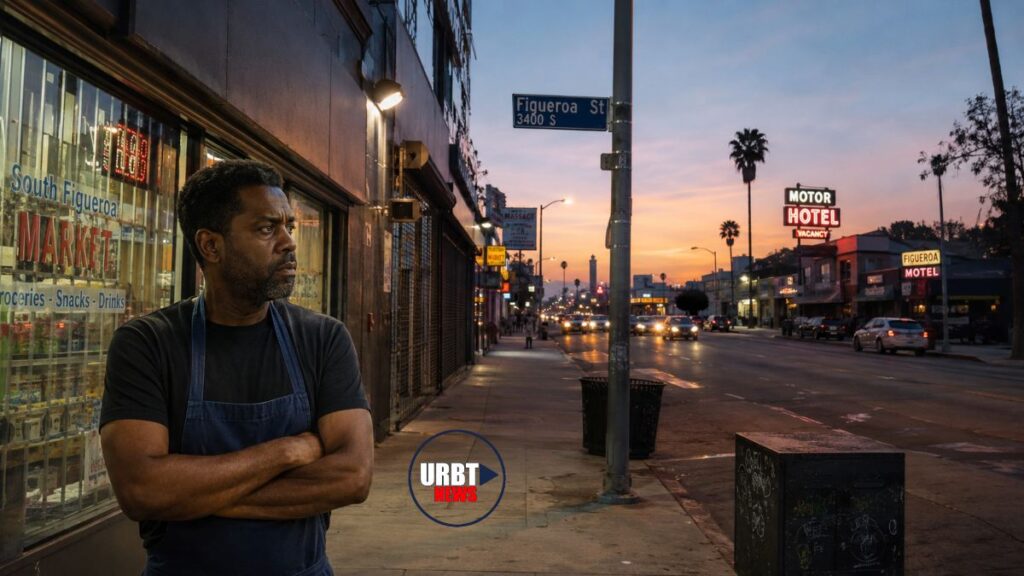
South Los Angeles business owners are increasingly furious over open-air sex trafficking on the Figueroa corridor. A local pastor recently pleaded with the Los Angeles South West Area Clergy-Police Council to intervene as half-naked sex workers line the streets. However, Senate Bill 357—which repealed California’s prostitution loitering law—has effectively tied the hands of the Los Angeles Police Department, leaving local businesses and community groups searching for solutions to combat human trafficking and restore neighborhood safety.
Local businesses on Los Angeles’s Figueroa Street are expressing intense frustration over rampant, visible prostitution, as decriminalization laws leave LAPD officers with few tools to intervene in human trafficking operations. Overview
Sex trafficking is a major problem in Los Angeles and something must be done immediately to rescue these neighborhoods. For the merchants operating along the historic Figueroa Corridor, the unchecked explosion of the street-level sex trade has moved past a municipal nuisance. It is now a full-blown economic and humanitarian emergency. Figueroa Street prostitution has effectively seized public sidewalks, transforming a vital commercial artery into a lawless red-light district.
Business owners feel abandoned by the city they pay taxes to support. As they watch half-naked sex workers walk the streets with little hindrance, their frustrations have boiled over. This has forced community leaders to seek alternative pathways for action, bypassing standard municipal channels that seem permanently gridlocked.
Figueroa Street prostitution – URBT News Podcast
What Exactly Happened?
During a closed-door meeting of the Los Angeles South West Area Clergy-Police Council, the depths of this crisis were laid bare. An anonymous local pastor, pleading for immediate intervention, detailed how local shops are suffering.
He described a desperate reality where minors and young women are openly exploited in broad daylight while the Los Angeles Police Department struggles to respond. This emotional plea prompted the council to officially take up the issue. The Clergy-Police Council is fundamentally against human trafficking, yet members admit their hands are often tied by state legislative changes. Meanwhile, residents on our URBT News local desk can read about similar community crises unfolding across the state.
Why Is This a Big Deal?
Visible solicitation does not occur in a vacuum; it actively degrades local commerce. Foot traffic to small grocery stores, auto shops, and family restaurants has plummeted. Business owners report that customers are too intimidated to park near their storefronts.
When children cannot walk to school without witnessing transactional sex, a neighborhood’s social fabric unravels. Local merchants face a terrible choice: pay for private security or close down entirely. This is why sex trafficking is a major problem in Los Angeles and something must be done to protect our vulnerable communities.
Who Is Involved and Why Does It Matter?
The battle lines involve local businesses, faith leaders, law enforcement, and highly organized criminal syndicates. The South West Area Clergy-Police Council acts as a crucial bridge, bringing together religious leaders and the LAPD to solve localized issues.
However, the police face sophisticated adversaries. A glaring example occurred when a federal jury convicted a former Inland Empire resident who was found guilty of sex trafficking a victim on L.A.’s Figueroa Street, a prostitution hub. These traffickers exploit vulnerable runaway teens, using the strip as their personal marketplace.
What Are People Getting Wrong About This?
Many observers assume that the LAPD is simply refusing to enforce the law. This is a profound misunderstanding.
In reality, state lawmakers passed Senate Bill 357, which repealed the crime of loitering with the intent to commit prostitution. While advocates intended to protect marginalized communities from profiling, critics argue the legislation opened the floodgates. As a recent Los Angeles Times report points out, the law has severely restricted police intervention. Officers cannot make arrests based on street loitering alone, effectively stripping them of their primary proactive tool.
What Happens If Nothing Changes?
If state and local officials do not pivot, South Los Angeles will see an accelerating exodus of legitimate businesses. This void will be quickly filled by gang-affiliated activities.
Motels along the corridor will continue to operate as hubs for exploitation. In response, city attorneys have attempted to file public nuisance lawsuits against notorious properties, matching the litigation from the LA City Attorney targeting specific local motels. Without systemic reform, these spot-fixes are merely band-aids. The street-level trade will continue to expand, dragging down property values and trapping more young women in cycles of abuse.
What Should You Do or Know?
As a community member, remaining silent is no longer an option. Supporting local business owners means showing up to community police advisory board meetings and expressing your concerns.
Readers who subscribe to URBT News can stay closely informed on these grass-roots movements. The county’s official public safety portal highlights Los Angeles County’s Commitment to Prevent and Address Child Trafficking, but citizens must hold elected leaders accountable. Your voice can help reshape the legislative landscape.
Subscribe to URBT News
Key Facts
Frequently Asked Questions
Why can’t the LAPD arrest sex workers on Figueroa Street?
Under Senate Bill 357, which was signed into California law, loitering with the intent to commit prostitution was decriminalized. Consequently, officers cannot arrest or detain individuals merely for standing on the street in revealing clothing or soliciting transactions.
What is the South West Area Clergy-Police Council?
The South West Area Clergy-Police Council is a collaborative group of local religious leaders and LAPD representatives who work together to address crime, social issues, and community safety. They serve as an important bridge for residents and business owners to voice their concerns directly to local law enforcement.
Is prostitution legal in Los Angeles?
No, prostitution remains illegal under California state law. However, while the act of buying and selling sex is still a crime, the visual presence of sex work has exploded because police can no longer arrest individuals for loitering.
How are local businesses on Figueroa Street affected?
Business owners report that rampant street solicitation is decimating their customer base and threatening their livelihood. Foot traffic is down because patrons feel unsafe or uncomfortable entering storefronts where illicit activity is openly occurring.
How is the city combating human trafficking along the corridor?
Federal and local agencies have launched joint efforts like the Figueroa Corridor Human Trafficking Initiative to target the pimps and “johns” who drive the demand. City attorneys also use civil nuisance lawsuits to shut down motels that facilitate sex work and gang activity.
Where can I report human trafficking in Los Angeles County?
Residents can report suspected human trafficking or seek help by calling the National Human Trafficking Hotline at 1-888-373-7888. Local resources and support services are also coordinated through Los Angeles County’s public safety portals.
Source Transparency
Primary source type: Public Statement
Verification method: Meeting with Los Angeles SW AREA CLERGY-POLICE COUNCIL
Named source: Los Angeles County’s Commitment to Prevent and Address Child Trafficking Human Trafficking
Human TraffickingFormer Inland Empire Resident Found Guilty of Sex Trafficking Victim on L.A.’s Figueroa Street, a Prostitution Hub https://www.justice.gov/usao-cdca/pr/former-inland-empire-resident-found-guilty-sex-trafficking-victim-las-figueroa-street
Reported by: URBT Business Desk
Byline disclosure: Reviewed by URBT’s editorial team before publication.
Last updated: 2026-06-29